What a Triathlon Training Camp in Mallorca Actually Does to You
I want to be honest with you about something before I start.
This week, I wasn't the coach.
I was the athlete.
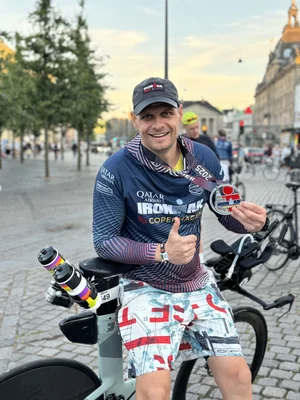
I packed my bike, flew to Palma, and spent a week training at the Scientific Triathlon x Next Level Camp triathlon training camp in Mallorca — not as staff, not as an observer, but as a participant. Doing the sessions. Following the plan. Feeling every kilometre in my legs by Thursday.
And it was exactly what I needed.
Why I went
There's a version of this story where I tell you I went to Mallorca to make myself a better coach. To observe elite coaching methodology in action. To gather insights I could bring back to my athletes.
That's all true. But it's not the real reason.
The real reason is simpler. I needed to train, and I needed to do it somewhere that wasn't the Netherlands in April.
I'm racing Ironman 70.3 Alcúdia Mallorca — and later Ironman Klagenfurt in Austria. The 70.3 Mallorca is a build block for Klagenfurt, not the A-race. And to be clear: I would not recommend doing a training camp one week before your key race. That's not the situation here. This was purposeful loading in the right window.
I'm a coach who still races. That's not an accident — it's a choice I've made deliberately, because I think a coach who stops competing slowly loses something. The feel of a training block building week by week. The anxiety before a hard session. The specific kind of tired you feel on day four of a big week when your legs have been worked and you still have two sessions left.
You can read about those things. You can coach through them. But there's nothing quite like being inside them yourself.
So: Mallorca. One week. Training camp. Me as the athlete.
The setup
The camp was based at the PortBlue Club Pollentia Resort & Spa in Alcúdia, in the north of the island. If you've never been to Mallorca for cycling, I'll save you the research: the north is extraordinary. Mountains, coastal roads, climbs that punish you and reward you in equal measure.
Scientific Triathlon brought the coaching knowledge. Mikael Eriksson built the framework — his team are some of the most evidence-based coaches in the sport. On the ground, representing Scientific Triathlon, was coach David Dhooge. Next Level Camp brought the local expertise. Frank and Kaisa Jakobsen know these roads the way I know the Westfriesland bike course: every corner.
The structure was six days of training — swimming, cycling, running, Q&A workshops. Groups were split by ability so nobody was left behind and nobody was coasting.
One more thing worth saying before I get into the days: I brought my TT bike. In a week I'm racing 70.3 Alcúdia, so it made sense to race-specific my training. But on Mallorca's climbs, a TT bike is a humbling choice. I'll come back to this.
Day by day — the honest version
April 26 — Day 1: First ride + swim
Coll de sa Batalla — 70km, 800m elevation gain
I arrived the evening before and built my bike in my room. That's a ritual I've come to appreciate. Torque settings, brakes, shifting. It's your race machine. You should know it.
Morning started with a briefing from David and Frank. Rules of group riding, route overview, how we'd be split. Three groups, based on average pace and ability. Clear, organised, no ambiguity.
The first ride climbed to Lluc — and the highlight is the mandatory photo stop at the Repsol gas station at Coll de sa Batalla. If you follow cycling on Instagram, you know this corner. It's on every Mallorca cycling account. There's a reason for that.
For a coach from the Netherlands — a country where the king of flats has far more influence than the king of mountains — that first climb on a TT bike was already a test. Not just of fitness. Of confidence on the climbs and descents. The group leaders were excellent. Some strong descenders in the bunch gave me lines to follow, and I came off the mountain faster than I expected.
That afternoon: the pool. Coach David explained the session, split us by CSS pace, and watched every lane. Swimming pool felt too warm for Mallorca weather — even here the pool is heated — so the first few hundred metres were adjustment. We did 1,800m total: warm-up, specific drills, David at the wall giving feedback to every athlete. Every one. He didn't miss anyone. That's what good coaching looks like from the inside. Not grand gestures. Just attention, consistently given.
April 27 — Day 2: Sa Calobra + easy run
Sa Calobra — 100km, 2,000m elevation gain
Sa Calobra has been on my bucket list for two years.
Every Mallorca cycling post on Instagram eventually shows you those hairpins. That descent into the gorge. The impossible road carved out of the rock face. I'd watched it enough times that the actual thing still managed to surprise me. By the second hour I'd stopped watching wheels and started riding. By the third hour, my legs were having a conversation with my brain about choices I'd made.
Here's the thing about Sa Calobra that the videos don't fully explain: you first descend to it. There is no other road. You go down, and then you have to climb back up, because that's the only way out. The hairpins you see on the way down become the climbs you have to survive on the way back up — some at 8 to 10 percent gradient.
We regrouped at the coffee stop under the arch at Bar Els Arcs before the descent, took a moment, then dropped down. A quick stop at the bottom, then straight into the climb. You want to start early — as the morning progresses the road gets busy. Buses, cars, other cyclists. A sharp corner stop and restart on a gradient like that is not fun.
I climbed it on my TT bike. It was harder than day one. But I made it to the top. Well-deserved coffee at the arch.
The ride back descended Coll de Femenia to Pollença.
I loved every minute of it.
Afternoon: a shakeout run along the coast toward Pollença and back. Easy 10km. David drifted through the different pace groups, catching up with every athlete. Everyone's Zone 2 is different. Nobody ran alone.
April 28 — Day 3: Cap de Formentor + swim + Frank's DNA method
Cap de Formentor — 50km, 900m elevation gain
"Recovery day" at a triathlon training camp is a relative term. What it usually means is: shorter session, easier effort. And an afternoon where you can sit by the pool and pretend your legs don't feel like they belong to someone else.
But first: Cap de Formentor.
Lovevelo describes the route as possibly the best 40km ride in Europe. That might be a stretch. Or it might not be. What I can tell you is that by day three, my legs had adjusted to climbing. My confidence on the descents had grown. And the moment you come out of a hairpin turn and the lighthouse appears in the distance across the water — that one I'll keep for a while.
It's a route everyone should do at least once. I'm coming back the following week with my wife. I already know she'll love it.
The afternoon swim: same groups, same coach, same attention from David. At dinner that evening, one of the athletes told the story of David's feedback on his swimming. His exact words: "Your technique is actually not that bad. You're just slow." David, for the record, did not confirm he said this.
After the swim: a Q&A session with Frank Jakobsen. He walked us through the DNA Method — a framework he's developed over years of coaching, including working with Ironman World Champion Craig Alexander. The core idea is that no single training approach fits everyone. Highly individual. Just like actual DNA.
A few of the points that stayed with me:
Goal & Motivation — the athlete must be primarily intrinsically motivated. The will to succeed must come from within. You can't manufacture that from the outside.
Unique Circumstances — a strength right now could become a weakness in three months. Life changes. Training needs to change with it.
Time Management — how the athlete spends time outside training matters. Excessive phone use and social media are common performance drains that don't get talked about enough.
Nutrition — personalised sodium loss data at different intensities and temperatures. Managing body pH during intense effort. Not generic advice — individual data.
It was the kind of session I didn't want to end. I was taking notes and asking questions the whole way through.
(If you want to go deeper on Frank's methodology — there's a great podcast with him and Mikael on Scientific Triathlon.)
April 29 — Day 4: The long run
23km, endurance pace
There is always a hard day at camp. Usually it's mid-week, when cumulative fatigue has built and the sessions haven't let up.
This was it.
Long run day. Two to two-and-a-half hours at endurance pace. Two groups: one running 4:45–5:15 min/km, one at 5:30–6:00 min/km. Some athletes cut it at 15km. Some of us — myself included — went to 23km.
We ran through Alcúdia, along the coast, on trail. There were goats. There was fresh air. There were legs that had already climbed Sa Calobra and Cap de Formentor earlier in the week.
You find out something on a run like that. You find out what's left when the easy options are gone. Kilometre 18. Legs from Sa Calobra still in the bank. Still moving. That's the number I'll remember.
The afternoon swim was quieter. More relaxed, by necessity. Technique and low aerobic work. Not everyone made it to the pool — the spa was a competing option and it won for a few athletes. No judgement. Recovery is recovery.
April 30 — Day 5: Puig Major
135km, 2,000m elevation gain
The king stage.
The Puig Major is the highest mountain on Mallorca — 1,445 metres above sea level, deep in the Serra de Tramuntana range. This was the day I'd had the most respect for, and the most anxiety about, since I signed up for camp.
I even checked beforehand whether there was a shortcut that would let me only do the descent. There wasn't. There never is.
I did this climb on my TT bike. I saw almost no other TT bikes on the road all week — almost everyone else was on a road bike. Most people are, on climbs like this. But with Ironman 70.3 Alcúdia a week away, I was committed to the bike I'd race on.
It was harder than it would have been on a road bike. Significantly. But it was also an experience I won't forget.
This is where I noticed something I tell my athletes all the time but have to keep relearning myself: the purpose of the hard day isn't to destroy you. It's to show you what you have left when you think you're empty.
You almost always have more than you think.
David and the group leaders were there throughout — visible, supportive, never pushing anyone beyond what was safe or smart. That's what good camp structure looks like. You're challenged. You're not abandoned.
Afternoon: spa. I'd had access to it all week and hadn't used it. Today I made time. Turbojets on the legs. Cold plunge for recovery. It was exactly what day five legs needed.
At 5:30pm, another Q&A — this one with David. His coaching methodology, his approach to periodisation, the questions the group had been accumulating all week. Another session I wouldn't have wanted to miss.
May 1 — Day 6: The last session
Brick workout — three transitions, three paces + final swim
The last session of a training camp is always strange. You're tired in a specific, deep way that a single night's sleep won't fix. But you're also reluctant. The bubble is about to pop. No more all-you-can-eat breakfast and dinner. No more riding with a group who understands exactly why you're here.
Frank and the Next Level Camp team set up a transition area at the base of Coll de Femenia. The workout was something I'd never done before:
Three complete transitions. Three different race paces:
Ironman pace — descend to the roundabout in Pollentia, ride back, rack the bike, run 4km at IM effort
Ironman 70.3 pace — same loop, rack, run 3km at 70.3 effort
Olympic distance pace — same loop, rack, run 2km at OD effort
Three transitions. Three different intensities. Back to back. By the end, your legs know exactly what race-pace transitions feel like across the full spectrum.
I'm going to bring this workout back to the athletes I coach. It's one of those sessions that teaches your body something it can't learn from a standard brick. The specificity is the point.
Final swim in the afternoon. Threshold work. Smaller group — not everyone had swim left in them by this point. We got it done.
Drinks after concluded the camp.
What a week like this actually does
People ask whether training camps are worth it. It's a fair question — they're not cheap, they take time, and the week itself is genuinely hard.
Here's my honest answer.
The fitness gain is real but not the point. One week doesn't transform your aerobic base. What it does is plant a seed. The growth happens in the weeks after, if you manage recovery well. The work you do at camp isn't the finish line. It's the trigger.
What actually changes is your head. After six days of training twice a day surrounded by athletes who care as much about this as you do, something shifts. Your standards go up. Your excuses go down. You come home knowing what a real training week feels like — and that changes how your regular sessions land.
You learn things you can't learn alone. The technique feedback, the workshops, Frank's DNA Method, David's Q&A — this is expert knowledge applied directly to your specific weaknesses. The three-pace brick. The Sa Calobra mindset. The swim feedback at the wall after every set. That kind of input is hard to replicate anywhere else.
You meet people you wouldn't otherwise meet. The group at this camp ranged from Kona qualifiers to athletes preparing for their first full Ironman. Different nationalities, different ages, different backgrounds. What they shared: the same love for the sport, the same willingness to push, and the same ability to laugh about suffering over dinner.
That part costs nothing extra. And it's worth a lot.
What this changes about how I coach
I came from Mallorca with three things.
First: a renewed respect for what it feels like to be on the receiving end of coaching. To trust the process even when your legs are asking for a day off. My athletes do this every week. Spending a week doing it myself reminded me how much trust that takes — and how much it matters to honour that trust.
Second: the three-pace brick workout. I'm building this into my brick sessions with athletes. The specificity of practising transitions at different race-pace intensities in the same session is something I'd underweighted before. That changes now.
Third: the reminder that I'm still an athlete, not just a coach. A coach who trains is a different coach from one who doesn't. Not better in every way — but more connected to the physical reality of what training actually feels like. That connection shows up in the coaching. I believe it. And I've just had another week of evidence for it.
Should you do a training camp?
Maybe.
It depends on where you are in your season, what your goals are, and what your body and schedule can handle. A training camp isn't right for everyone at every time.
But if you've been training consistently, you have a clear A-race this season, and you want a week that accelerates your preparation and gives you something you can't get from three months of solo sessions — then yes. A camp like this is worth serious consideration.
Mallorca specifically is worth it for the cycling alone. The roads in the north of the island are among the best in Europe. If your weakness is the bike — and for many triathletes coming from running or swimming backgrounds, it is — a week in those mountains will do more for your confidence on two wheels than almost anything else.
If you're curious about whether a training camp fits your current season and goals, book a free consultation and let's talk it through. It's the kind of question that's much easier to answer once I know your race calendar and where you are right now.
One last thing
On the final evening, after the last swim and before dinner, I sat outside for a while and didn't think about training.
I thought about why I started.April 2022. A road bike. No idea what I was doing.
And then I thought about where I am now — Ironman finisher, certified coach, sitting in the north of Mallorca after a week of hard training with a group of people who understand exactly why you get up at 5:30am to swim before the sun is fully up.
Some weeks remind you why you do this.
This was one of those weeks.
Training alongside other athletes is one of the best things you can do for your motivation and your standards. If you want that same sense of accountability and direction in your daily training — without needing to fly to Mallorca — let's talk.
Thinking about your next race?
Book a free 30-minute call — we'll talk through your goals, your schedule, and what it takes to get there.