How to Train for Ironman 70.3 Westfriesland
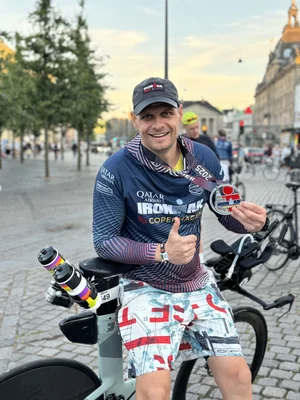
I've stood on that start line twice. The difference wasn't fitness. It was preparation.
Got a spot for Westfriesland 2027?
It sold out in 5 hours — which means the field is set, and you're in. The question now isn't whether you'll race. It's whether you'll arrive at that start line prepared, or improvising.
With the race on June 20, 2027, the athletes who have a good day are the ones who started building over winter — not the ones who panicked in spring. This guide is where to start.
This guide is everything I know about training specifically for Westfriesland — not a generic 70.3 plan, but preparation built around what this course actually demands. The cold harbour swim. The flat, fast, wind-exposed bike. The run through town where your legs decide whether the last three months were worth it.
If you're targeting this race, read this before you start training.
Is Ironman 70.3 Westfriesland Right For You?
Before we talk training, let's talk honesty.
Westfriesland is a genuinely beginner-friendly 70.3. The rolling swim start removes the chaos of a mass wave. The bike course is flat. The run is well-supported. If you're targeting your first half Ironman, this is one of the best races in Europe to do it.
But beginner-friendly doesn't mean easy. It's still 1.9km of open water, 90km on the bike, and a half marathon. In sequence. On the same day.
What you need to race it well isn't talent. It's a training plan you actually follow, enough time to build the aerobic base, and the patience not to blow up the first time a session feels hard.
Most athletes need 16–20 weeks of structured preparation for their first 70.3. If you've done sprint triathlons before, 16 weeks is realistic. If you're coming from running or cycling only, 20 weeks gives you the time to build the weaker discipline without rushing it.
Working backward from a June 20, 2027 race, here's what that means in real dates. A 20-week build means starting in late January or early February. A more conservative 24-week base — the smart choice if you're coming from a single sport, or coming back after time away — means starting in early January. If you're reading this over winter, you're not early. You're right on time. The athletes who leave it until spring are the ones playing catch-up all the way to the start line.
Phase 1 — Building the Base (Weeks 1–8)
This is the phase most athletes rush. Don't.
The goal of the first eight weeks is aerobic foundation. Not speed. Not intensity. The ability to go for a long time at a controlled effort — and recover from it the next day.
In practice this means:
Long rides that feel almost too easy. If you're breathing hard, you're going too fast.
Long runs at a conversational pace. If you can't talk, slow down.
Swim volume over swim speed. Get comfortable in the water before you worry about time.
Heart rate zone 2 is your best friend in this phase. Most athletes train too hard here because easy feels wrong. It isn't. The aerobic engine you build in these eight weeks is the engine that carries you through kilometre 18 of the run.
One specific note for Westfriesland: get into open water as early in your build as possible. The harbour swim in Hoorn is manageable — but if race day is the first time you've swum in open water since last season, you will lose minutes to anxiety, disorientation, and the shock of cold water on your face. Pool swimming and open water swimming are related but different skills. Treat them that way.
Phase 2 — Build and Race-Specific Work (Weeks 9–14)
This is where the training gets interesting.
From week 9 onwards, the focus shifts from volume to quality. You're building on the aerobic base, not replacing it — but now you're adding sessions that feel like racing.
Key workouts in this phase:
Brick sessions. Bike followed immediately by a run. Start with short combinations — 60 minutes on the bike, 20 minutes running — and build toward 2.5 hours on the bike and 40 minutes running. Your legs will feel strange the first few times. That strangeness disappears with repetition. Start brick training no later than week 9. Athletes who leave it until week 13 always regret it.
Race-pace intervals on the bike. The Westfriesland bike course rewards athletes who can hold a steady, controlled power output for 90km. Practice that in training. Long intervals at your target race power — 20 minutes, 30 minutes, building to 40 minutes — teach your body what sustainable feels like.
Threshold run sessions. 20–30 minutes at the effort you plan to run off the bike. Not a sprint, not a jog — controlled discomfort. This is the pace you need to be able to sustain after 90km in the saddle.
Open water swim sessions. At least once a week from week 9. Practise sighting. Practise drafting. Practise swimming in a straight line when you can't see the bottom.
The Westfriesland Bike — How to Train For the Wind
This is the section most guides skip. Don't.
The bike course at Westfriesland is flat. That sounds like good news, and mostly it is. But flat in the Netherlands means exposed. There are no hills to shelter behind. When the wind blows — and in late June, it usually does — it blows across the entire course with nothing to stop it.
Training implication: don't train exclusively in sheltered conditions. If you only ride on indoor trainers or in sheltered urban routes, the mental and physical shock of a 30kph headwind on the return leg will cost you far more than the wind itself.
Go out in the wind. Practise riding at race power when the wind is against you. Learn to sit tight, lower your position, and accept that your speed will drop while your effort stays constant. That acceptance alone will save you energy on race day.
Pacing on the bike is the single biggest lever on your run performance. I've seen athletes ride the first 45km at full gas, feel incredible, and then watch their run fall apart from kilometre 6. The flat course tempts you to push. The athletes who run well at Westfriesland are the ones who ride the bike at 85–90% of their capability — not 100%.
A practical target: if your best standalone 90km time is 2h 45, plan to ride 2h 55 at Westfriesland. The 10 minutes you give back on the bike you will reclaim on the run — with interest.
The Swim — What to Actually Practise
The Westfriesland swim is 1.9km in the harbour at Hoorn. Rolling start, well-marked, beginner-friendly.
Here's what to focus on in training:
Sighting. Every 10–12 strokes, lift your eyes and find the next buoy. Practise this in the pool first — it disrupts your rhythm more than you think. In open water, athletes who can't sight efficiently add 100–200m to their swim through wandering. That's 3–4 minutes. For free.
Cold water acclimatisation. The North Sea and Dutch harbours are cold, even in July. Get in cold open water at least 4–5 times before race day. The first time you put your face in water below 18°C, your breathing goes. The fifth time, it doesn't. Race morning should not be the experiment.
Starting position. Seed yourself by expected swim time, not ego. I started too far forward in my first race and spent 400 metres being swum over by faster athletes. It's chaotic, it's exhausting, and it's completely avoidable.
Wetsuit practice. If you plan to race in a wetsuit — and at Westfriesland the water temperature almost always makes it legal and worthwhile — train in it. At least four or five sessions. A wetsuit changes your body position, your stroke, and your breathing. Race day is not the time to figure that out.
Race Nutrition — The Part Most Athletes Get Wrong
Nutrition is not a detail. At 70.3 distance, it is a discipline. You have roughly 4–6 hours of racing. Your body carries approximately 90 minutes of glycogen at race intensity. The maths is not complicated: if you don't eat on the bike, you will have nothing left on the run.
The principle: start eating at 30 minutes into the bike, regardless of how you feel. By the time you feel hungry, you're already behind.
What works for most athletes at Westfriesland:
60–90g of carbohydrate per hour on the bike — gels, chews, bars, or a combination
750–1000ml of fluid per hour, adjusted for temperature
Transition to simpler, easily digestible foods on the run — cola, bananas, broth at later aid stations if gels stop working
Test your race nutrition in training. Every long brick session in Phase 2 is a nutrition rehearsal. What works at kilometre 3 of the run may not work at kilometre 18. Find out in training, not on race day.
The Two Weeks Before Race Day
The hardest thing about taper is doing less when your body is finally fit enough to do more.
Week 2 out: reduce volume by 30–40%. Keep intensity in short, sharp doses. Two or three quality sessions — not long ones. Your fitness is banked. You're not improving it now; you're arriving fresh.
Race week: volume drops further. Short, sharp sessions to keep the legs awake. One open water swim. One 45-minute ride with a few race-pace efforts. One easy 20-minute run.
Sleep, eat, and stay off your feet. The athletes who sabotage their taper are the ones who decide race week is a good time to walk 25,000 steps around Amsterdam. It isn't.
Check the weather forecast obsessively from Thursday. Wind direction matters for pacing strategy. Temperature matters for nutrition and cooling. Rain matters for the bike descents — there aren't many at Westfriesland, but wet Dutch roads are slippery. Know what you're walking into.
A Note on Getting Help
The athletes who perform best aren't necessarily the most talented. They're the ones who followed a structured plan, didn't skip the sessions that felt boring, and arrived at the start line having rehearsed race day — not improvised it.
If you're targeting Westfriesland and want a training plan built specifically around your schedule, fitness level, and goals — not a generic PDF — that's exactly what I do.
Start with a free 30-minute conversation. We'll talk through your timeline, what you have in place, and what a proper build looks like for you.
Already entered Westfriesland? Read the companion piece: Ironman 70.3 Westfriesland — Course Guide, Race Tips & What to Expect
Thinking about your next race?
Book a free 30-minute call — we'll talk through your goals, your schedule, and what it takes to get there.